DEFIANCE: Law, Dignity, and the Right to Rebuild
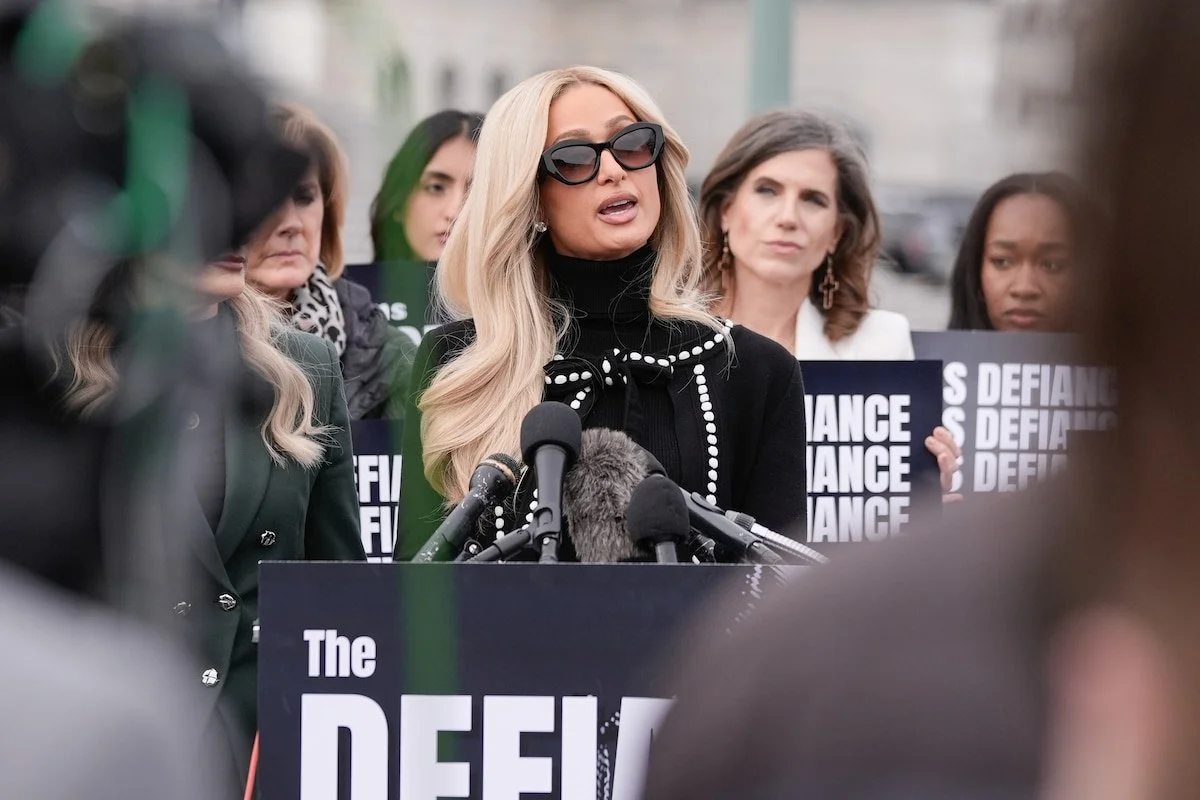
Recent legislative efforts such as the DEFIANCE Act (Disrupt Explicit Forged Images and Non-Consensual Edits Act) mark a significant shift in how societies and government bodies are beginning to confront technology-enabled abuse. Publicly endorsed by Paris Hilton, the proposed legislation seeks to give victims of AI-generated or digitally manipulated explicit content the ability to pursue civil action against those who create, distribute, or profit from such material without consent. In doing so, it attempts to close a legal gap that has allowed synthetic media and online exploitation to proliferate faster than existing laws could address.
More than a regulatory response to artificial intelligence alone, the Act reflects an evolving recognition that identity, consent, and personal dignity must be protected in digital spaces as rigorously as they are offline.
Legislation like this matters, and this article is going to outline exactly why.
The Reality for Survivors of Cyber Bullying, Stalking and Harassment
For many survivors of harassment, stalking, or image-based extortion and abuse, the harm extends beyond psychological injury. Many survivors of cyber bullying, stalking, and harassment struggle with self esteem, confidence and the ability to move forward in life or in their career. The shame and fear that many survivors grapple with in trying to reintegrate with their life, career and social circle is compounded by the absence of clear pathways to resolution.
Digital violations can be endlessly reproduced, shared across jurisdictions, and monetised in ways that make accountability difficult to establish. Without legal recognition, victims are often left navigating fragmented reporting systems with little recourse or support.
Last year, US Congress passed the Take It Down Act, which outlaws both real and computer-generated non consensual intimate imagery of individuals. Social media and digital platforms will be required, under the Act, to implement a process to remove non consensual intimate images within 48 hours by May 2026.
The DEFIANCE Act and the Take It Down Act were conceived of as a dual solution to the problem of deepfake abuse. Both the DEFIANCE Act and the Take It Down Act were introduced after AI-generated sexually explicit images of Taylor Swift went viral on X in January 2024.
The effects of gender-based violence, cyber bullying, stalking and harassment are far reaching, especially for women. Studies from global health and development agencies (including WHO, UN Women, and the World Bank) consistently find that survivors of gender-based violence and harassment face:
Interrupted education
Reduced lifetime earnings
Higher rates of informal or unstable employment
Greater likelihood of financial dependence early in adulthood
Trauma from such instances of harassment or gender-based violence can affect executive functioning, risk tolerance, and confidence; all of which influence confidence in the workplace, entrepreneurship and career mobility. Digital abuse frequently disrupts employment, damages reputations, and forces women in particular to withdraw from professional or public life in order to protect themselves.
Researchers have linked exposure to violence with higher rates of:
PTSD and chronic stress
Imposter syndrome and diminished self-efficacy
Difficulty accessing networks or trusting institutions
“Time poverty” due to caregiving burdens and survival demands
When legal systems acknowledge these impacts as legitimate economic and psychological harms, they begin to dismantle the false divide between online experiences and “real-world” consequences. Protection under law becomes a means of safeguarding participation in work, creativity, and community rather than simply punishing wrongdoing.
By establishing mechanisms for liability and damages, legislation like the DEFIANCE Act reframes these violations as actionable offenses rather than inevitable consequences of technological change. It provides something essential to victims for recovery: the ability to name the harm, pursue justice, and regain agency over one’s narrative.
The Path Forward
Such measures also signal a broader cultural recalibration. For decades, technological innovation has advanced under the assumption that regulation would follow, if at all. The emergence of targeted protections suggests a growing willingness to assert that progress must be accompanied by responsibility. Establishing legal accountability helps reshape norms around consent and digital ethics, encouraging institutions, platforms, and individuals to treat the misuse of technology not as an abstract risk but as a violation of human rights.
Ultimately, legislation of this kind is not only about restriction. It is about restoration. When survivors are given viable legal avenues and societal validation, they are better positioned to re-enter workplaces, rebuild confidence, and pursue meaningful lives beyond the moment of harm.
In that sense, the DEFIANCE Act represents more than a response to emerging technologies. It reflects an ongoing effort to ensure that innovation does not outpace humanity, and that systems of law continue to protect the fundamental right to rebuild.
As these legal and cultural shifts unfold, Shekinah House is committed to standing at this intersection of advocacy, restoration, and opportunity. In 2026, our mission is to translate conversations about protection and accountability into tangible pathways that support women as they reintegrate into professional, creative, and community life after experiences of harm. Through partnerships, resources, and collaborative initiatives, we seek to create environments where recovery is not the end of the story, but the beginning of renewed participation, purpose, and leadership.
Our work is grounded in the belief that when women are equipped to reclaim their agency, they do not simply return to society. They help reshape it.

