In the Company of ‘difficult’ Women.
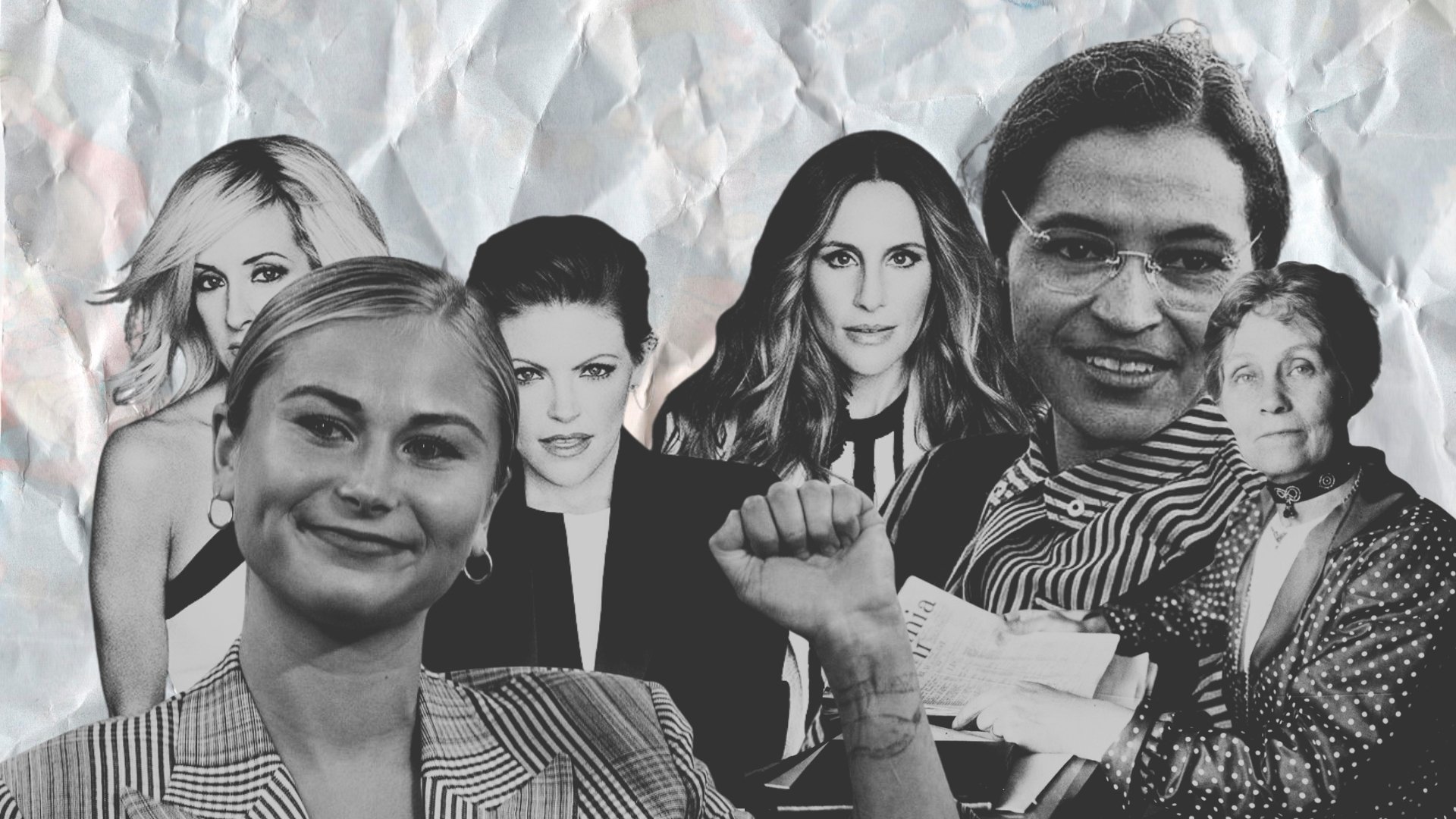
This week, public discourse in Australia ignited after Prime Minister Anthony Albanese, in media commentary, referred to Australian of the Year and activist Grace Tame as “difficult”. The fleeting remark prompted widespread reaction, not simply because of the fact it was directed at Tame who has been outspoken and fiercely proactive in advocating for human rights and policy reform, but because of what the word itself seemed to signal.
At the same time, criticism has mounted internationally over comments made by U.S. President Donald Trump about the U.S. women’s hockey team after their stellar win at the Olympics. Many observers viewed the recorded phone call between Trump and the U.S men’s hockey team as dismissive of the women’s achievements and greatly disappointing.
As March approaches and conversations turn toward International Women’s Day 2026, once again we as a society are at an inflection point. These moments feel less like isolated incidents and more like another reminder that the language used to describe women in public life still carries deeply embedded assumption.
There is still work to do.
Ad Hominem
The word difficult, and others like it when used to characterise or describe women, has a long history. This type of language is often applied to women who are direct, unwavering, or unwilling to soften the edges of their message and voice. It shifts attention away from the substance of what is being said and onto tone, personality, or delivery. It moves people away from the merit of the messaging, argument or work of a woman, and focuses squarely on the woman themself.
The act is sometimes subtle but the effect is powerful. This is a known political and media tactic; it is called ad hominem.
Ad hominem framing is an intentional rhetorical tactic in which attention is redirected from the substance of an argument to the character or demeanour of the person making it. In contexts like this one, labeling a woman “difficult” shifts public focus away from what a woman is advocating for and onto how she is perceived, and liked or disliked, all of which subtly undermines the legitimacy of her voice without addressing the issues she raises.
Many women know this feeling deeply, which I believe contributes to the strong reaction invoked by the PM’s comment about Tame. I know this well too. I have at times been labelled as '‘full on’, ‘bullish’, and a ‘stupid girl’ when dealing with small minded people, or trying to execute strategy, or trying to perform to the high standard I hold myself to in my career as a strategist.
In Anthologia Issue 2, I wrote about this experience and my core takeaway from navigating difficult environments like this:
I’m a grown woman now with unwavering conviction about what I want to create with the time I have on this earth. I have made many choices and mistakes alike in my twenties. I have won some and failed equally. These lessons have guided me through navigating an ambitious career as a business and marketing strategist, whether in high-stakes boardrooms or complex negotiations. I’ve built brands, teams and strategies in spaces where I wasn’t always welcomed or valued, and I’ve grappled with misogyny, harassment, and loss many times along the way. The world can be loud and unfair sometimes, but as women, if we quiet ourselves to let purpose, not fear, shape our paths and decisions, we step into our power.
This labeling comes from the vein of misogyny running quietly beneath public discourse. It pulsates whenever women refuse to perform with agreeableness in order to be heard or respected. We saw the same rhetoric when Tame refused to smile beside former PM Scott Morrison. At the time, I released an op-ed in a private networking group of professional women called ‘Women aren’t smiling for you anymore, and we don’t have to.’ That piece has been lost to the archives, but I may try to resurrect the draft from my files and re-publish it, because it’s apparent it’s still relevant today.
History offers many examples of women who, in their own time, were characterised in similar ways.
Emmeline Pankhurst and the suffragettes were condemned as disruptive and unreasonable for demanding voting rights in Great Britain and Ireland.
Rosa Parks was criticised for refusing to give up her seat on a segregated bus in 1955 in Alabama.
The Dixie Chicks faced significant widespread backlash in 2003 after lead singer Natalie Maines criticised President George W. Bush and the Iraq War during a concert in London. This led to blacklisting from country radio, protests, and a sharp decline in their album sales.
Countless women across many movements for civil rights, labour or health reform, education, and politics have frequently been described as troublesome, disruptive, disobedient or, yes… difficult. The labels come before they were recognised as transformative.
As Grace Tame pointed out in her comments this week:
‘Difficult’ is the misogynist’s code for a woman who won’t comply. History tends to call her ‘courageous’.
The persistence of negatively labeling women reflects enduring expectations about how women should occupy space and show up.
Many societies have long rewarded women for submissiveness, emotional labour, and quaint restraint. When a woman steps outside that script or social norm, particularly in arenas shaped by hierarchy or power, she is seen not simply as assertive but as violating an unspoken code of conduct.
At Shekinah House, this moment feels like an invitation to reflect on the environments we create for women in public, professional, and creative life. Progress requires cultures willing to hear women without reflexively diminishing them. It requires spaces where conviction and challenge is not mistaken for conflict, and where participation is not conditional on likability. This is what drives our mission to create programs, offerings and resources that support women in their life, career and business.
Standing in the company of so-called “difficult” women means recognising a lineage of voices that have insisted on dignity, accountability, and change even when it was uncomfortable or the non-sensical thing to do. It means understanding that what is often labelled as difficult is, in fact, the necessary friction that moves societies forward.
As we approach International Women’s Day 2026, perhaps the question is not why women are still called difficult, but what kind of world we could build if we chose to listen rather than label.

