Digital Literacy Is Becoming a Humanitarian Necessity

Advocacy Essay, Thought Leadership, By Author S. Jo-Anne
A flag covering a politician’s eyes, a brilliant art installation by Banksy. Women protesting for their rights anonymously, in the famous Handmaid’s Tale gowns. A redacted document from the stack of evidence in the Epstein Files, withheld from the public. Iran’s extensive internet shutdown which was an illustration of the Iranian authorities’ capacity and willingness to exert centralised control over the country’s national digital infrastructure.
These are not just images of real events that have taken place this year, they are representative of censorship, authoritarianism and resistance. They evoke the aesthetic of fascism: power made monumental, people made expendable, and the suppression of individual agency and sovereignty.
In a year that has been earmarked by a number of technological and intelligence advances, the list of critical humanitarian crises’ has never been longer.
All of the above beg a single question: Can technological progress truly be called ‘progress’ when millions remain unable to navigate, resist or meaningfully use the systems that are shaping their lives?
Technology and humanitarian work are becoming inseparable, yet the importance of digital literacy is often underestimated until you encounter its absence firsthand. For example, when speaking with displaced communities, supporting women escaping domestic violence, or sitting in policy meetings where a technological solution is evident but overlooked because decision-makers default to what has worked before.
The experience above as described is exactly what happened recently, when I was invited to take part in an important discussion on the rollout of a rehabilitation and reintegration program for women in the LAC region. These are women who have suffered extensive domestic violence, displaced women, and women who have been incarcerated wrongly. When discussing the ways in which data and records are handled, I learned that many of those processes are still happening by paper, handled and distributed by humans; which has sadly led to the forging and tampering of evidence which in some cases is critical to the survival, freedom or path forward for the affected women.
In these settings, digital literacy is not simply technical competence; it determines which solutions can be crafted, understood and safely implemented by all stakeholders; including those who are the most vulnerable in these circumstances.
In 2026, not understanding the digital world can cost a person their income, identity, privacy, rights and accessibility to economic participation. The leap between knowledge or ignorance could be the difference in whether a refugee is able to acclimate in a new country, or an organisation is able to reliably coordinate aid efforts, or a woman on the run is able to navigate her way to a safe house.
Digital literacy was once treated as a workplace or professional advantage, reserved for those who work in STEM, technology or digital businesses.
Today, it is becoming essential for the everyday person to know, for personal security and economic participation, but equally for organisations around the world to operationalise.
What is digital literacy?
Digital literacy is the ability to access, understand, evaluate and use digital technologies safely, critically and effectively; not only knowing how to operate a device or simply using the internet for general purposes. This includes understanding data privacy and use, the basics of cyber security, and human or civil rights in digital services or platforms, where relative.
Why does it matter so much in 2026? The simple answer is that the threats facing vulnerable communities around the world are no longer only physical, elemental or political.
The kind of exploitative threats that exist in 2026 include AI-powered fraud, identity theft, sophisticated phishing scams and financial scams, misinformation and the extraction of personal data by platforms people often use but rarely understand.
Earlier this year, it was reported that domestic abusers are learning increasingly to use AI, smartwatches and other technology like Oura rings and Fitbits to attack and control their victims.
Record numbers of women, who have been abused and controlled through these technologies, were referred to Refuge’s specialist services during late 2025, including a 62% increase in the most complex cases. There was also a 24% increase in referrals of under-30s.
Yet despite the urgency of this issue, digital literacy remains a privilege.
In the communities where it could offer the greatest protection or access to necessary education, devices and reliable connectivity can be limited, unaffordable or even deliberately disrupted.
How the Jousour initiative in Iraq created a pathway to success for displaced, vulnerable communities
A real world example of improving digital literacy to restore agency of self, and provide a path forward, is the World Food Programme’s Jousour initiative in Iraq which set out to provide digital skills with English, entrepreneurship and financial-inclusion training for displaced Iraqis, Syrian refugees and other vulnerable people in the local community. By November 2023, the wider program had trained more than 9,700 participants.
Jousour means “bridges” in Arabic. This initiative was launched with Iraq’s Ministry of Higher Education and Scientific Research to extend digital-skills training through universities and connect young people with opportunities to build better livelihoods.
Many of those participants went on to secure new job opportunities, freelancing opportunities and other means of income that would have otherwise been hard to capture.
This is what digital inclusion should make possible, not simply access to a device or platform, but the capacity to earn, communicate and rebuild economic agency even after something as devastating as displacement.
The task for humanitarian organisation’s right now is to create this bridge to self agency and possibility. But this does not come without grave responsibility, as financial services, employment and essential information move online; the stakes continue to rise.
Iran’s Blackout: What Happens When the Bridge is Deliberately Broken
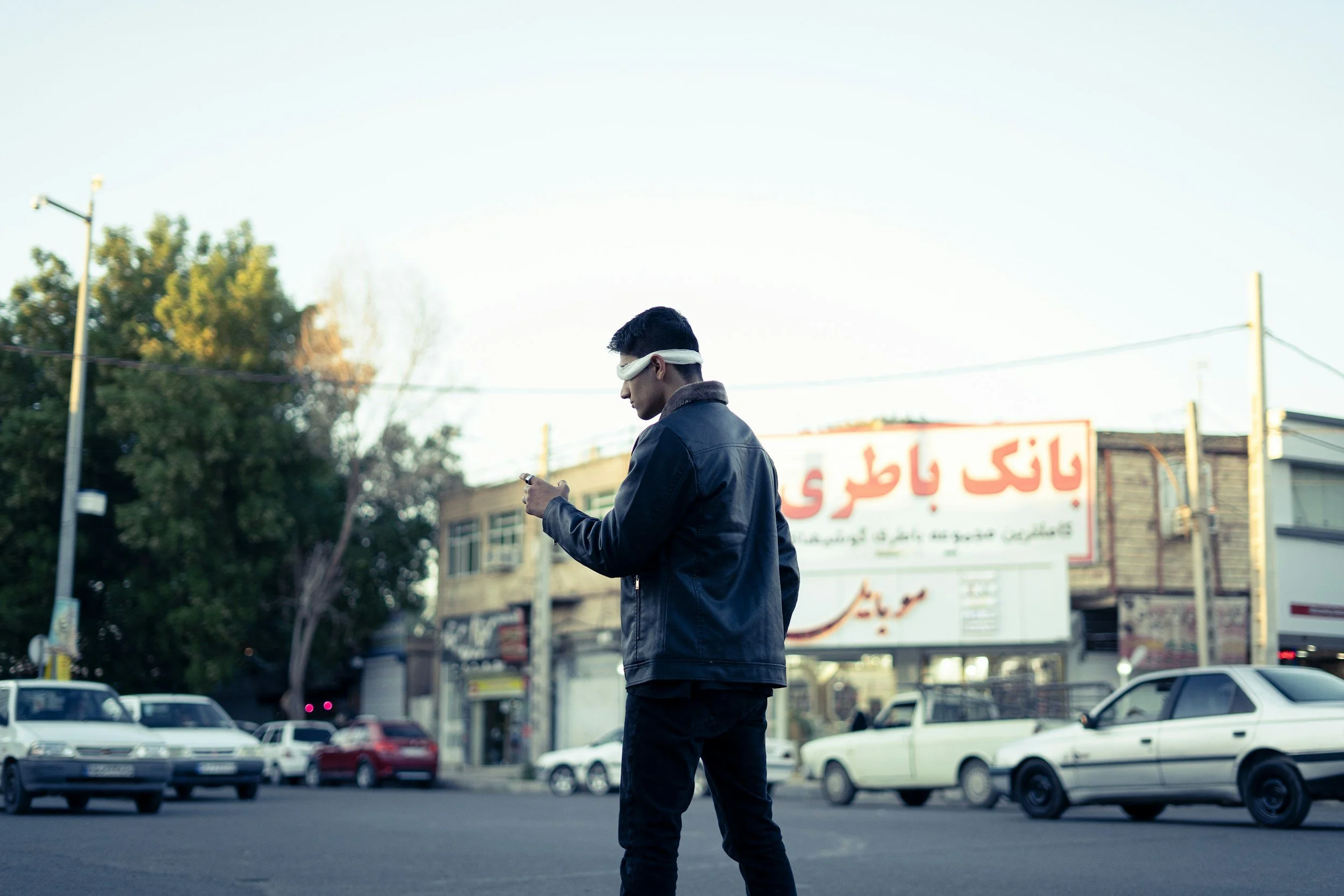
Iran’s January 2026 internet shutdown reveals how quickly digital infrastructure can become an instrument of control.
A research paper by Giuseppe Aceto, Valerio Persico and Antonio Pescapè titled ‘Iran’s January 2026 Internet Shutdown: Public Data, Censorship Methods, and Circumvention Techniques’ characterises the initial shutdown as lasting approximately ten days, from 8–18 January. Crucially, its findings show that even when connectivity was restored, it did not mean a full return to open access or ‘business as usual’ for the affected population of internet users.
The researchers found through extensive review of various datasets that the internet’s underlying routing system remained largely connected or was restored during the shutdown, even while access to services remained entirely blocked through other technical mechanisms.
In simpler terms, a network could appear connected and online, while the people relying on it were still unable to communicate or use it.
What followed was a more selective, controlled system. After accessibility and connectivity was restored to civilians, traffic remained below earlier levels, and access to websites and applications was increasingly restricted and censored.
Field reports cited by the authors described allow-lists, access to approved services, and authorisation procedures that potentially included a new layer of in-person identification. The researchers argue that this embedded surveillance into the access layer of digital services, in ways outside monitoring could struggle to detect.
For humanitarian organisations and technology companies alike, that is a clear reason to listen closely to communities and pay attention to what is happening. A national connectivity graph cannot tell us whether a woman can safely contact support, whether a displaced family can access necessary information or documents, or whether an aid worker can reliably coordinate assistance and resources.
Technical literacy must therefore include increasing the understanding of the difference between having a connection and having safe, meaningful access.
Organisations to Watch and Follow
It’s not up to one organisation alone to address every layer of this challenge. These four listed below, however, are working across the essential fronts of internet access, digital education, privacy and decentralised infrastructure:
Access Now and the #KeepItOn Coalition monitor enforced internet shutdowns, support affected vulnerable communities and advocate against restrictions that disrupt access to healthcare, education, banking and humanitarian aid. The coalition now includes more than 366 organisations worldwide. Access Now
Digital Citizen Fund provides women and girls, particularly in Afghanistan, with digital literacy, financial education, STEAM training and pathways towards entrepreneurship. Its work demonstrates how digital education can restore agency where conventional opportunities have been systematically removed. digitalcitizenfund.org
Ludlow Institute, founded by Naomi Brockwell, combines privacy research with accessible education, practical tools and advocacy. Its work helps ordinary people understand surveillance and make more informed decisions about their digital lives. Discover & Engage Today
Logos is developing private-by-default, decentralised infrastructure for secure communication, censorship-resistant value exchange and coordination in hostile environments. Its work explores what it could mean to build privacy into the underlying technology rather than attempting to add it later. logos.co
Together, their work illustrates the wider system that must be built: civil and privacy rights advocacy that protects access, education that strengthens human agency and infrastructure designed to remain resilient to ensure self agency and safety.
The practical priorities are clear:
Map where sensitive data is collected, stored, shared and vulnerable to tampering.
Train staff and communities in account security, consent, misinformation, financial safety and shutdown preparedness.
Test privacy-preserving credentials and payment systems without placing personal information on-chain.
Build offline procedures, alternative communications and recovery plans for periods of restricted connectivity.
Give affected communities a role in choosing, testing and governing the systems intended to protect them.
Digital literacy is the human layer of this infrastructure. Privacy-preserving technology is the technical layer. Neither is sufficient alone, but together, they can give vulnerable people more control over their identity, information and economic lives.
Digital literacy is no longer preparation for the future. It is protection, and opportunity, for the present.
